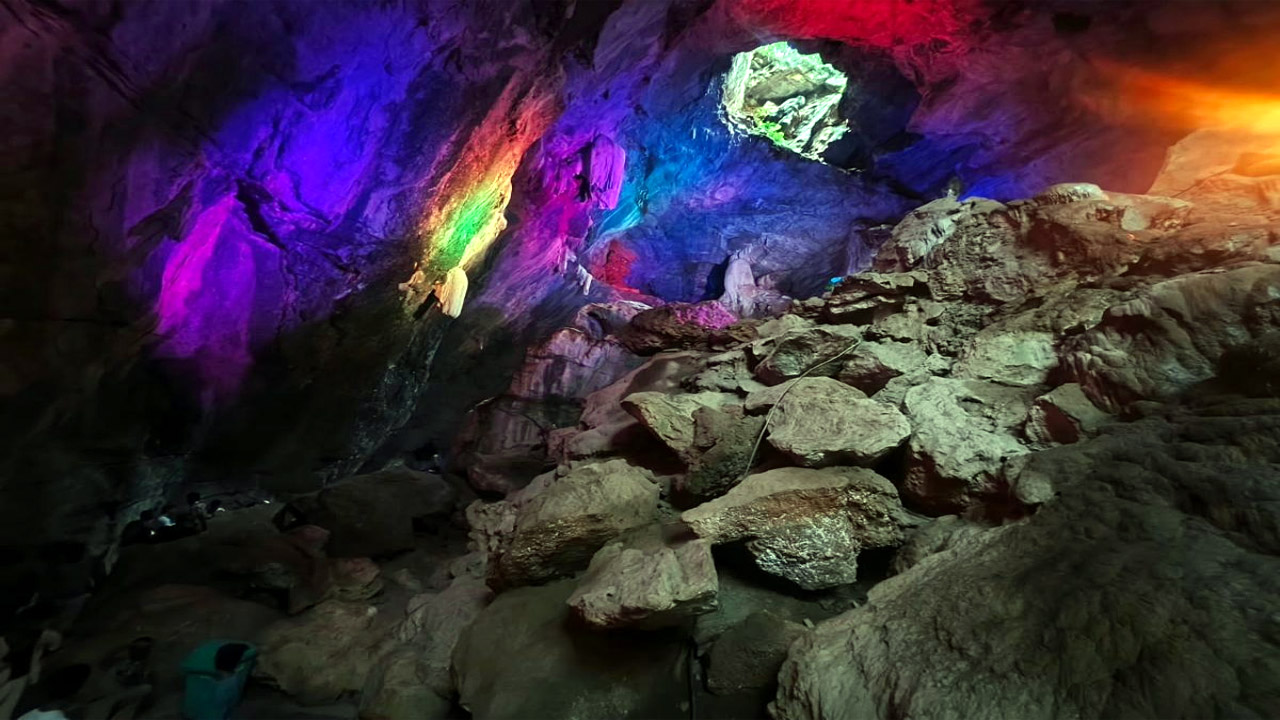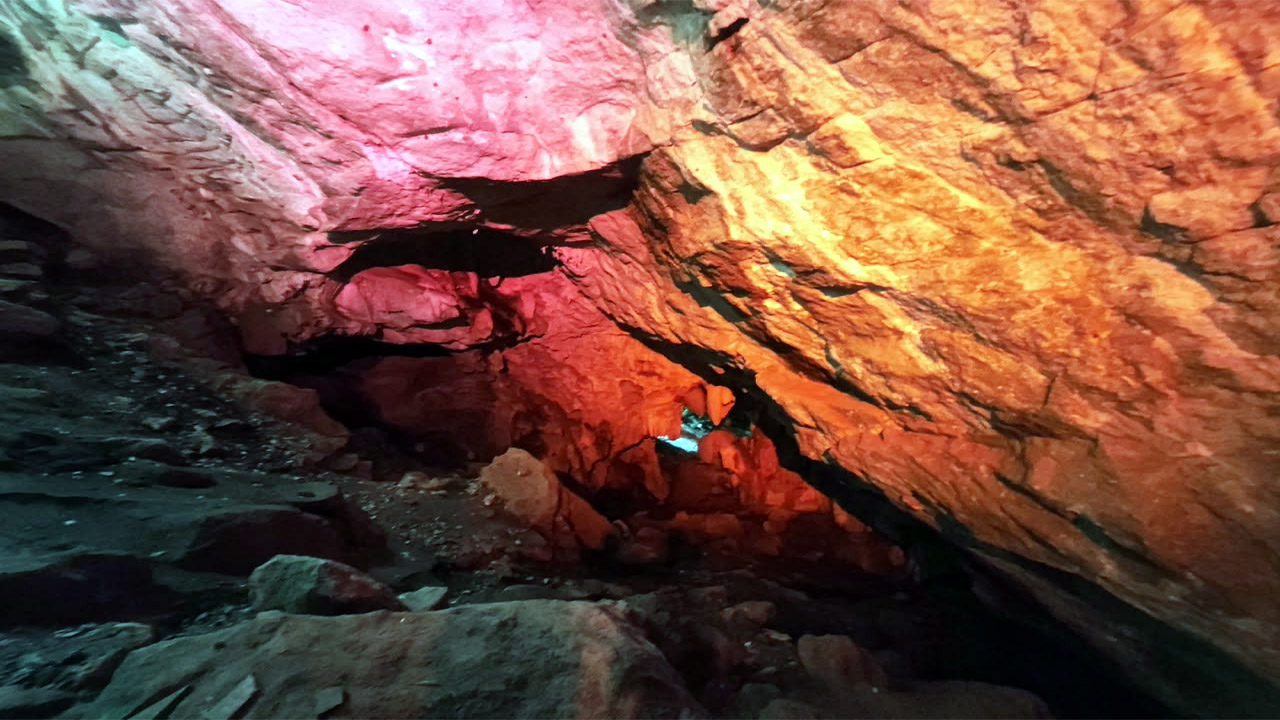
Visakhapatnam. Beyond the beauty visible on the mountain slopes, nature has crafted a distinct world within them as well. The Borra Caves, located in the Araku Valley of Andhra Pradesh, are a magnificent example of this. Nestled amidst the Ananthagiri Hills, these natural caves attract tourists with their unique rock formations, mineral deposits, and associated folklore.
A delegation of journalists from Rajasthan, visiting Andhra Pradesh under the Government of India’s ‘Development Communication and Information Dissemination’ scheme, toured the Borra Caves on the fifth day of their trip. Led by Amit Kanojia, Assistant Director of the Press Information Bureau (Jaipur), the team closely observed the caves’ natural architecture and tourism-related aspects.
A Natural World Created by Countless Droplets
The Borra Caves are essentially natural limestone caves. Prolonged water seepage and flow eroded the rock, gradually forming underground tunnels and vast chambers.
Inside the caves, structures can be seen hanging from the ceiling; these are known as stalactites. Conversely, structures rising upwards from the ground are called stalagmites. Many of these formations resemble humans, animals, or birds, making the cave experience even more fascinating.
Discovery of the Caves in 1807
The discovery of the Borra Caves in 1807 is credited to William King George of the Geological Survey of India. Subsequently, the region gradually gained recognition as a significant site for geology and tourism.
Currently, the Borra Caves are located in the Alluri Sitarama Raju district. A natural formation resembling a *Shivling* exists within the cave, with water droplets continuously falling onto it from the rock above. Local belief also links this area to the origin of the Gosthani River. A Distinct World of Minerals Inside the Cave
The rock formations at Borra Caves are said to contain minerals such as calcite, mica, and quartz, alongside limestone. Creatures like bats and golden geckos inhabit the cave, while various species of moss and algae lend a unique character to the environment.
Lighting arrangements have been installed inside the cave for tourists. When illuminated, the shapes and textures of the rock formations become clearly visible, enhancing the experience of viewing the natural structures within.
A Legend Involving a Cow Still Circulates Today
A local tribal folktale associated with Borra Caves is also popular among the people. According to the story, a cow fell through a hole in the cave’s roof while grazing. A cowherd searching for the animal discovered the cave and, upon entering, spotted a formation resembling a *Shivling*.
Although this story is regarded as local folklore and lacks historical evidence, the belief reflects the cultural and religious significance attached to Borra Caves.
The appeal of Borra Caves extends beyond the caves themselves; the site offers a convergence of geology, natural heritage, tribal folklore, and religious faith. This makes it a premier tourist destination for visitors to the Araku Valley, offering a distinctive natural experience.