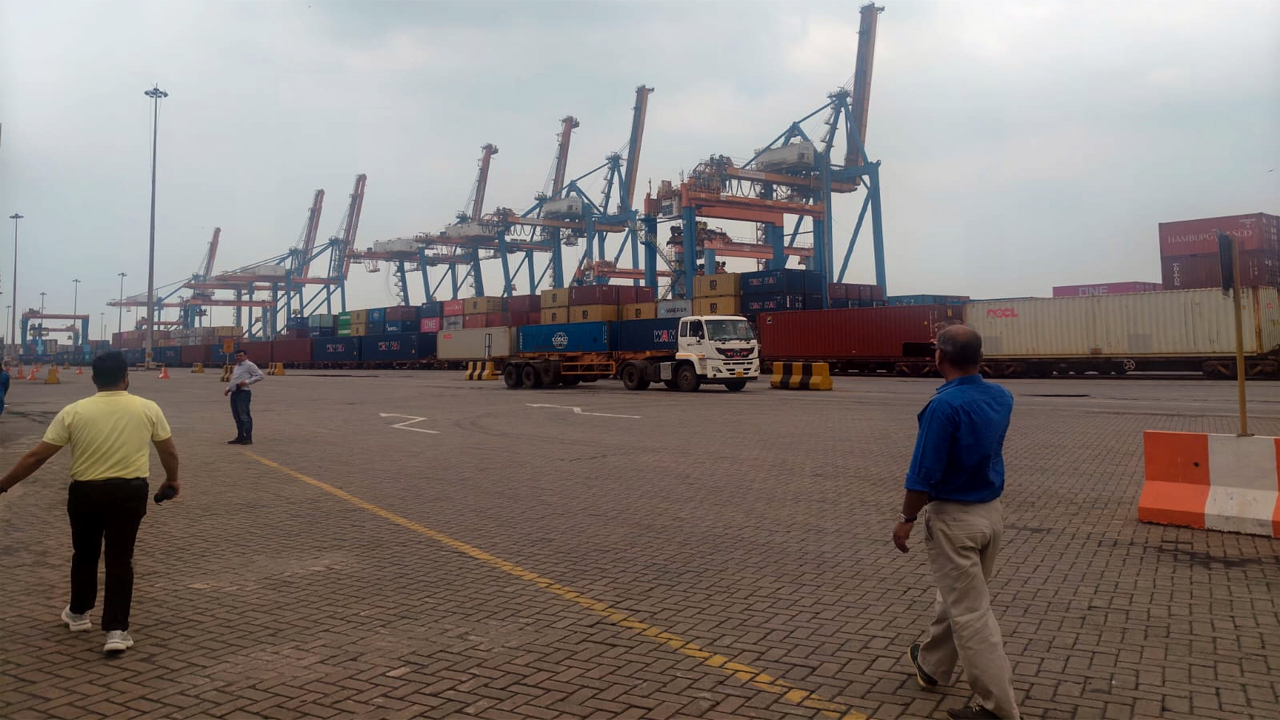
-A major maritime hub handling everything from large vessels to containers, coal, iron ore, steel, and petroleum
-Capacity growing through modern terminal facilities and green initiatives
Visakhapatnam. Visakhapatnam Port, which began operations in 1933 with the export of mineral ores on a limited scale, is today counted among the country’s major maritime trade hubs. In the 2024-25 fiscal year, the port handled 82.62 million tonnes (approximately 8.26 crore tonnes) of cargo. It facilitates the movement of a wide range of goods, including large maritime vessels, container cargo, coal, iron ore, steel, petroleum products, fertilizers, and other industrial commodities. Operations at the modern Visakhapatnam Port commenced on October 7, 1933, with the arrival of the vessel SS Jaladurga. While the initial phase focused primarily on mineral ore exports, the diversity of cargo handled at the port has steadily expanded alongside the growth of industrial activities and trade. Today, it serves as a vital maritime logistics hub not only for Andhra Pradesh but also for Odisha, Chhattisgarh, Telangana, and other parts of the country.
Capacity to handle large vessels
The geographical location of Visakhapatnam Port is one of its key features. The natural formation of ‘Dolphin’s Nose’ provides protection against adverse sea conditions. The outer harbor has the capacity to handle large vessels of up to approximately 200,000 DWT (Deadweight Tonnage). Modern facilities have also been developed at the container terminal. The terminal features an 845-meter quay length, four berths, seven quay cranes, 18 e-RTGs (Electric Rubber-Tired Gantry cranes), 4,412 ground slots, and a water depth of approximately 16.5 meters. The facility boasts a capacity of approximately 1,300 TEUs, 650 reefer charging points, and the capability to handle vessels with a Length Overall (LOA) of up to 390 meters. Cargo movement is expedited through two on-dock rail sidings and six semi-automated gates.
Large Vessels and Record Container Operations
According to data from JM Baxi Ports & Logistics’ Visakhapatnam Container Terminal, the largest vessel—featuring an LOA of 366 meters and a capacity of 15,934 TEUs—was handled in July 2025. That same month saw a record monthly throughput of 62,035 TEUs. Other milestones include a record parcel size of 3,909 TEUs in October 2025 and the handling of 100 rakes in January 2025. In terms of operational efficiency, the average vessel turnaround time is reported to be around 20 hours, while peak crane productivity reached 40 moves per hour. The terminal is also capable of handling three vessels simultaneously and providing immediate berthing upon arrival.
Network Connecting Major Industrial Regions
The Visakhapatnam Port’s cargo network extends to industrial regions across several states. Connected areas include Jharsuguda, Sambalpur, Angul, Kalinganagar, Cuttack, and Bhubaneswar in Odisha. Key hinterland regions include Korba, Raigarh, Raipur, and Rajnandgaon in Chhattisgarh, as well as Hyderabad in Telangana. In Andhra Pradesh, the network connects to industrial and commercial hubs such as Kakinada, Guntur, the Godavari region, Srikakulam, Bobbili, Vizianagaram, and Parwada, in addition to Visakhapatnam itself. Exports ranging from metals to marine products
Key exports from the port include ferroalloys, aluminum, steel, shrimp, and rice. Imports comprise scrap, chemicals, refractory materials, heavy minerals, pharmaceutical products, paper, machinery, and spare parts. Container cargo destined for Nepal is also part of Visakhapatnam’s trade network. Available data shows a volume of 45,582 TEUs for Nepal-bound cargo, marking a 24 percent increase over the comparable period. Containers and other goods are also being transported from the port to the country’s hinterland via rail logistics.
Emphasis on green technology
Measures are being taken to mitigate environmental impact alongside rising cargo operations. Yard equipment at the terminal—including RMQCs, 18 RTGs, five reach stackers, and a forklift—has been electrified. Plans are also in place to replace existing trailers with electric vehicles. A green belt spanning approximately 9 acres has been developed within the terminal area, where over 2,200 plants are being maintained. Additionally, a 5 MW solar power plant is planned. The facility has also achieved ‘Zero Liquid Discharge’ certification for water conservation.
Employment and social responsibility
Training has been provided to 548 individuals to develop skills relevant to port operations. As part of social responsibility initiatives, 32 medical camps were organized, providing free medical assistance to approximately 2,390 people. There is also a strong emphasis on increasing the participation of women in terminal operations.
Two major container terminals
Visakhapatnam Container Terminal comprises two major terminal facilities. VCT-I has a quay length of 449 meters and a capacity of 5.50 lakh TEUs, while VCT-II has a quay length of 395 meters and a capacity of 7.50 lakh TEUs. The concession periods for these facilities extend until September 2032 and March 2049, respectively. Thus, the journey of Visakhapatnam Port is not limited merely to the loading and unloading of cargo from ships; it has evolved into a vast network integrating maritime transport, container operations, rail logistics, industrial supply chains, and international trade. Having begun in 1933 with the limited export of mineral ores, this journey has now reached a stage involving the handling of millions of tonnes of cargo and large container vessels.